
If you let out a residential property and haven't told HMRC about the rent, the Let Property Campaign is the route HMRC gives landlords to put it right. You tell HMRC you're coming forward, work out what you owe, and pay it on terms that are usually far better than waiting to be found.
The campaign covers landlords in the UK and landlords who live abroad alike. It applies to one flat or a whole portfolio, to holiday lets and to a house you inherited and started renting out.
This guide explains who can use the campaign, how many years you need to go back, the 90-day process, how penalties are worked out, and the extra points to check if you live outside the UK.
Who can use the Let Property Campaign?
Is the campaign right for you? HMRC says it's for individual landlords with undisclosed income from letting residential property, in the UK or abroad. That includes:
Single or multiple properties: one buy-to-let or a portfolio, owned alone or jointly.
Holiday lets: including short lets through platforms such as Airbnb.
A room in your home: where the rent is above the £7,500 Rent a Room threshold.
Landlords living abroad: if you live overseas for six months or more and let a UK property.
Accidental landlords: for example, if you inherited a property and started renting it out.
It doesn't cover commercial property such as a shop or garage, or income belonging to a company or trust. Those go through HMRC's general Digital Disclosure Service instead. If HMRC has already told you it's opening an enquiry, a campaign disclosure is unlikely to be accepted, and you should disclose to the officer dealing with it.
👉 HMRC guidance: Let Property Campaign, your guide to making a disclosure
"There was no tax to pay" isn't the same as "nothing to report"
Why do so many landlords end up here? Often because they assumed a small or loss-making let didn't need declaring. The rules are stricter than that:
UK-resident landlords: you must tell HMRC by 5 October after the tax year in which you first have taxable rental income. For rent in 2025/26, that deadline is 5 October 2026.
Non-resident landlords: you're expected to file a Self Assessment return every year unless HMRC tells you otherwise, even if your profit is covered by the personal allowance. See our guide to the Non-Resident Landlord Scheme.
Loss-making years: a year with no tax due doesn't need to be in the disclosure, but keep the calculation. The loss can be carried forward against future rental profits.
If you're not sure whether you should have been filing at all, start with do I need to file a UK tax return.
How does HMRC find undeclared rental income?
How likely is HMRC to find out on its own? More likely every year. HMRC's Connect system matches information from many sources, including:
Letting agents: HMRC can require agents to provide details of the landlords they act for.
Digital platforms: since 1 January 2024, platforms such as Airbnb and Booking.com have had to report hosts' income to HMRC under the OECD platform reporting rules.
Property records: Land Registry ownership, tenancy deposit schemes and council tax records.
Overseas authorities: for landlords abroad, information shared under international exchange agreements.
HMRC also sends targeted letters to people it believes have undeclared rent. Coming forward before HMRC contacts you is what keeps a disclosure "unprompted", and that makes a real difference to the penalty.
How many years do you need to disclose?
How far back does it go? That depends on why the income wasn't declared. You assess your own behaviour on the disclosure, and that sets the number of years.
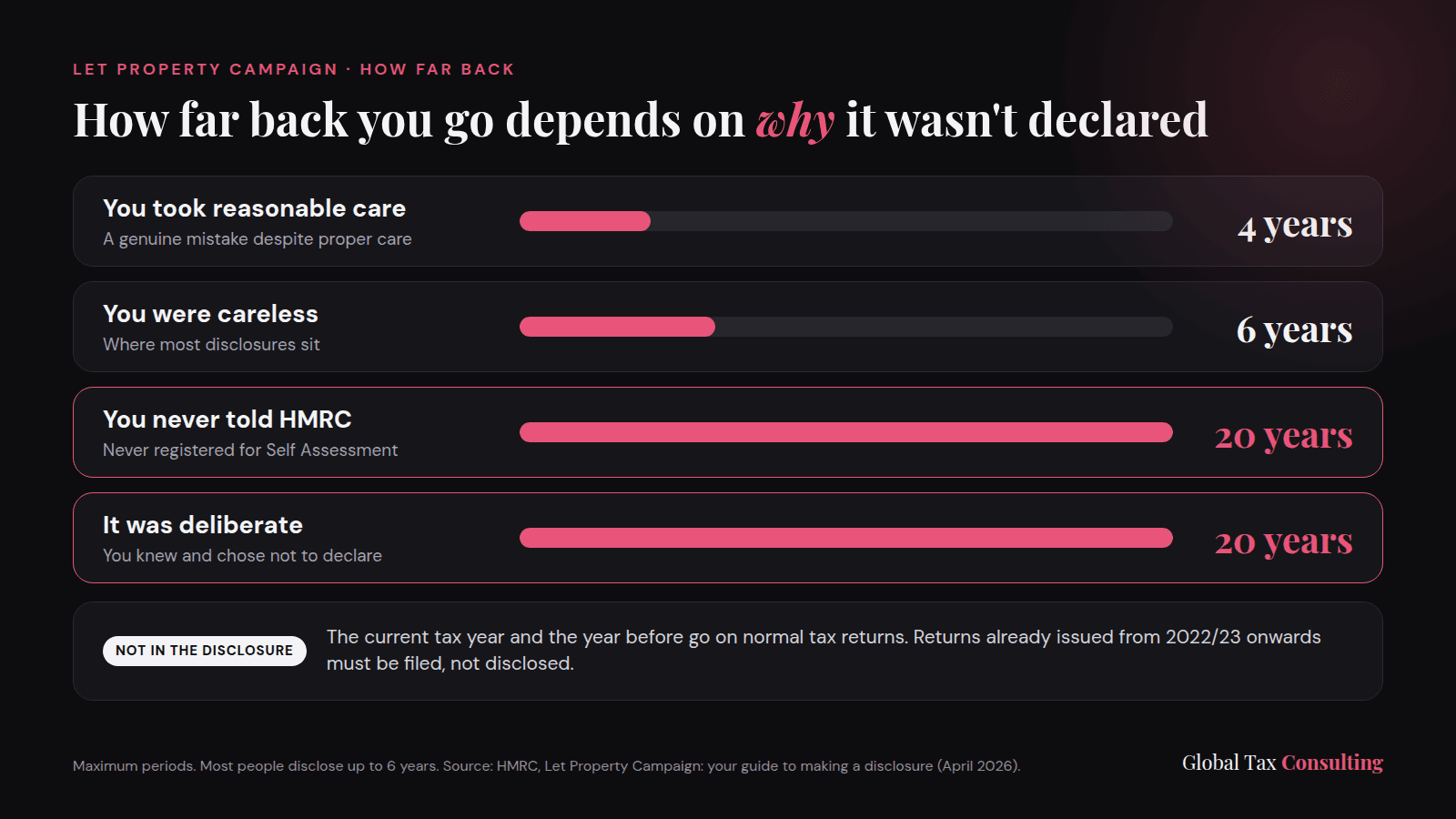
Image 1 — how far back a disclosure goes
You took reasonable care: up to 4 years. HMRC doesn't expect many people to fall into this category.
You were careless: up to 6 years. This is where most disclosures sit.
You never told HMRC at all: up to 20 years, where you failed to register for Self Assessment when you should have.
It was deliberate: up to 20 years.
Two years are handled differently. The current tax year, and the year before it, go on normal tax returns rather than in the disclosure. HMRC also expects any outstanding returns it has already issued, from 2022/23 onwards, to be completed rather than included.
Worked example: an inherited house
Sarah inherited her mother's house in 2019 and has let it since April 2019 for £900 a month. She earns £60,000 a year, so all her rental profit is taxed at 40%.
After agent fees, insurance and repairs, her profit is £8,400 a year. She never registered for Self Assessment.
Her disclosure covers 2019/20 to 2024/25: six years at £3,360 of tax a year, or £20,160 in total.
As a non-deliberate failure to notify, disclosed unprompted but more than three years late, her penalty is likely to be around 20% of the tax, or £4,032, plus interest on each year's tax.
Her 2025/26 rent goes on a tax return due by 31 January 2027, and 2026/27 on the return after that.
The five-step process, from notification to acceptance
What does the process involve? It runs to a fixed timetable, and the 90-day clock starts as soon as HMRC acknowledges your notification.

Image 2 — five steps and the 90-day clock
Notify HMRC. Tell HMRC you intend to make a disclosure. You don't need figures at this stage. HMRC sends you a disclosure reference number and a payment reference number. Joint owners each need their own notification and disclosure.
Gather records and calculate. Work out the income, allowable expenses and tax for each year, using the rules in force at the time. The phased restriction on mortgage interest between 2017/18 and 2020/21 is a common source of errors. If records are missing, HMRC accepts reasonable estimates, but keep your workings.
Prepare the disclosure. Set out the tax, interest and penalty for each year, your assessment of your behaviour, and a short explanation of why the income wasn't declared. The disclosure includes a formal offer to pay.
Pay. Payment is due with the disclosure, within the 90 days. If you can't pay in full, contact the Let Property Campaign helpline before you submit to agree an arrangement.
Wait for acceptance. HMRC acknowledges the disclosure and may ask questions. If it's satisfied, it sends an acceptance letter, which together with your offer forms a binding contract.
The disclosure must also include any other income or gains you haven't declared, such as untaxed interest or a gain on a property you sold. Leaving something out can lead to the disclosure being rejected.
👉 HMRC service: tell HMRC about underpaid tax from previous years
How are Let Property Campaign penalties worked out?
Why do two landlords with the same tax bill pay different penalties? Because the penalty is a percentage of the tax, and the percentage depends on your behaviour, whether HMRC prompted you, and the quality of your disclosure. For an unprompted disclosure of UK rental income, the ranges are:
Reasonable care: no penalty.
Careless inaccuracy on a return: 0% to 30%.
Non-deliberate failure to notify: 0% to 30%, with a minimum of 10% if you come forward more than 12 months after the tax was due.
Deliberate: 20% to 70%.
Deliberate and concealed: 30% to 100%.
Where you land in the range depends on telling HMRC everything, helping it understand the figures, and giving access to records. There's a catch for long-running cases: if you took more than three years to correct things, HMRC usually won't reduce the penalty below the minimum of the range plus 10 percentage points.
Income from property abroad is an offshore matter, with penalties of up to 200%. See our guide to the Worldwide Disclosure Facility.
👉 HMRC factsheet CC/FS11: penalties for failure to notify
👉 HMRC factsheet CC/FS7a: penalties for inaccuracies in returns
Living abroad? Extra points for non-resident landlords
Does the campaign work any differently if you've left the UK? The process is the same, but a few things change the numbers:
Tax already withheld: if your letting agent or tenant deducted 20% under the Non-Resident Landlord Scheme, that tax counts towards what you owe.
Your personal allowance: UK and EEA nationals, and residents of some treaty countries, can usually claim it. That can reduce the tax due for each year, sometimes to nil.
Residence questions: if your residence status for past years is unclear, flag it on the disclosure form. Your status under the Statutory Residence Test decides what else the UK could tax.
Property you've sold: non-residents must report every disposal of UK property within 60 days, even with no tax to pay. See non-resident capital gains tax.
Why come forward now?
Is it worth disclosing before HMRC writes to you? Almost always. An unprompted disclosure means:
Lower penalties: the minimum penalty is lower when HMRC hasn't prompted you.
A civil route: HMRC treats a complete, unprompted disclosure as a strong indicator that a criminal investigation isn't appropriate, although it can't guarantee immunity.
No publication: HMRC won't publish your details as a deliberate defaulter if you disclose fully, pay on time and co-operate.
Certainty: the acceptance letter closes the years covered.
If you'd like the rental figures worked out and the disclosure prepared for you, see our Let Property Campaign service.
Once the disclosure is accepted, you'll need to file returns on time going forward. If your gross income from property and self-employment is above £50,000, Making Tax Digital for Income Tax applies from April 2026, with the threshold falling to £30,000 from April 2027. HMRC has deferred it to April 2027 for people who file the SA109 residence pages.
Frequently asked questions
What is the HMRC Let Property Campaign?
The Let Property Campaign is an HMRC disclosure facility for individual landlords of residential property who have rental income they have not declared. You tell HMRC you want to make a disclosure, then have 90 days to submit it and pay what you owe. Coming forward voluntarily usually means lower penalties than waiting for HMRC to contact you.
Can I use the Let Property Campaign if I live abroad?
Yes. HMRC's guidance specifically includes landlords who live abroad for six months or more and let a UK property. Tax already withheld under the Non-Resident Landlord Scheme, and your personal allowance if you qualify, are taken into account.
How many years do I need to disclose under the Let Property Campaign?
Up to 4 years if you took reasonable care, up to 6 if you were careless, and up to 20 if you never registered or acted deliberately. The current and previous tax years go on normal tax returns rather than the disclosure.
What penalty will I pay under the Let Property Campaign?
For an unprompted disclosure of UK rent, careless errors carry 0% to 30% of the tax, deliberate errors 20% to 70%, and deliberate and concealed errors 30% to 100%. If you took more than three years to come forward, expect at least 10 percentage points above the minimum.
Do I need to disclose years when my property made a loss?
No. HMRC only expects years with unpaid tax in the disclosure. Keep the loss calculation, though, because rental losses can be carried forward against future rental profits.
Will HMRC prosecute me if I use the Let Property Campaign?
Prosecution is very unlikely after a complete, unprompted disclosure. HMRC can't offer immunity, but it treats a full voluntary disclosure as a strong reason to deal with a case through the civil route.
work with GTC
Get your position confirmed in writing
Global Tax Consulting advises internationally mobile individuals on residency reviews, UK tax planning and tax return preparation. Tell us where you are and what you earn, and you will have a fixed fee and a clear view of your UK tax position.
⭐ 5★ rated