
The Statutory Residence Test, or SRT, decides whether you're UK resident for a tax year. Everything else in your UK tax position follows from that answer.
If you're UK resident, you're taxed on your worldwide income and gains. If you're non-resident, the UK generally only taxes UK-source income, such as rent and UK workdays, and gains on UK land and property.
Since 6 April 2025, residence matters even more. Domicile has gone from UK tax, so the SRT now also decides who can claim the 4-year FIG regime and who is caught by inheritance tax on their worldwide estate. Confirming your residence status is the first step in any UK tax planning.
Watch: The UK Statutory Residence Test explained: are you UK tax resident?
Why does your residence status matter so much?
What actually changes when you cross the line? Your status for the year decides which of these apply to you:
UK resident: tax on worldwide income and gains as they arise. The remittance basis was abolished from 6 April 2025.
New arrivals: if you were non-resident for the 10 consecutive tax years before you arrive, you can claim four years of relief on foreign income and gains. See our guide to the 4-year FIG regime.
Non-resident: tax on UK-source income and UK property gains only, with most other gains outside UK tax. See what the UK still taxes once you've left.
Short absences: if you return within five years, some gains and income from your time abroad can be taxed when you come back. See our guide to the temporary non-residence rules.
Inheritance tax: if you've been UK resident in 10 of the previous 20 tax years, you're a long-term resident and your worldwide estate is in scope, with a tail of up to 10 years after you leave.
The SRT is applied one tax year at a time, from 6 April to 5 April. Your status can change from year to year, and you have to work it out afresh each year.
👉 HMRC guidance: RDR3 Statutory Residence Test
Key terms to know before you start
Why do definitions matter? Because the SRT is a counting exercise, and the counts depend on precise meanings that don't always match everyday language.
A day in the UK: you're in the UK at the end of the day, meaning midnight. A day trip that ends before midnight doesn't count, subject to the deeming rule below.
Transit days: if you arrive as a passenger and leave the next day, without doing anything substantially unrelated to your journey, the midnight doesn't count.
Exceptional circumstances: up to 60 days a year can be ignored if you're kept in the UK by events beyond your control, such as sudden serious illness or a natural disaster.
The deeming rule: if you were UK resident in at least one of the previous three tax years, have at least three UK ties, and are in the UK on more than 30 days without staying at midnight, every such day after the 30th counts as a UK day.
A workday: a day on which you do more than three hours' work in the UK.
A home: a place with a degree of permanence that you use as your home, owned or rented. A holiday home you only visit occasionally usually isn't a home, though it can still be accommodation.
👉 HMRC manual: days spent in the UK, the deeming rule and transit days (RFIG20700)
How the SRT works: three steps, in order
How do you actually apply the test? You work through three sets of tests in strict order. The first one that gives an answer settles your status for the year, and you stop there.
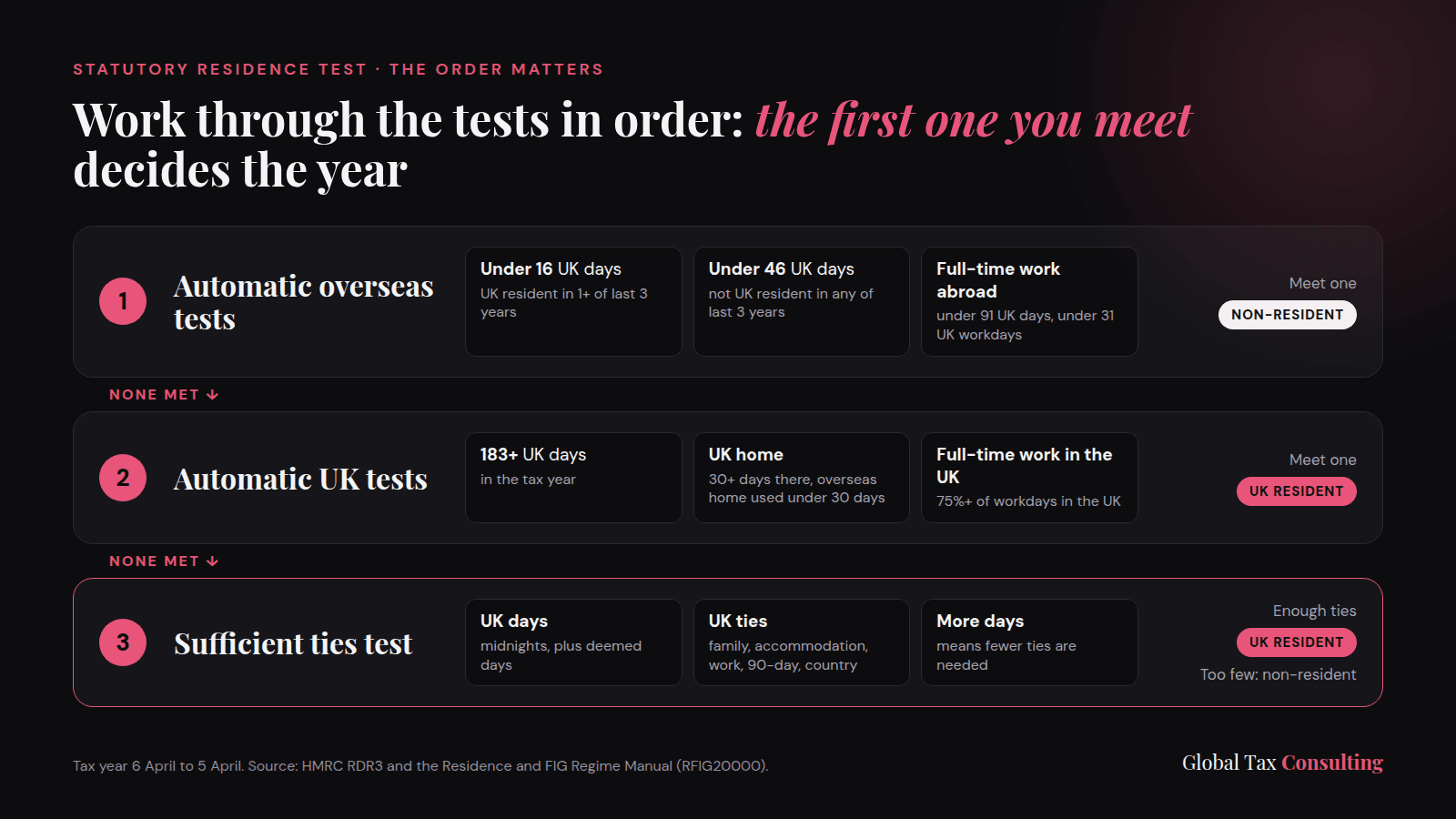
Image 1 — work through the tests in this order
Step | Tests | Result |
|---|---|---|
1. Automatic overseas tests | Under 16 UK days (UK resident in 1+ of the last 3 years); under 46 UK days (not UK resident in any of the last 3 years); full-time work abroad (under 91 UK days, under 31 UK workdays) | Meet one: non-resident. None met: go to step 2. |
2. Automatic UK tests | 183+ UK days in the tax year; UK home (30+ days there, overseas home used under 30 days); full-time work in the UK (75%+ of workdays in the UK) | Meet one: UK resident. None met: go to step 3. |
3. Sufficient ties test | UK days (midnights, plus deemed days) and UK ties (family, accommodation, work, 90-day, country). More days means fewer ties are needed. | Enough ties: UK resident. Too few: non-resident. |
You can't skip ahead. If you meet an automatic overseas test, you're non-resident, even if you'd otherwise meet an automatic UK test. Only if nothing in steps one and two applies do you reach the sufficient ties test.
Step 1: the automatic overseas tests
You're automatically non-resident for the year if you meet any one of these:
Fewer than 16 UK days: and you were UK resident in one or more of the previous three tax years.
Fewer than 46 UK days: and you weren't UK resident in any of the previous three tax years.
Full-time work abroad: you work an average of 35 hours or more a week overseas with no significant break, have fewer than 31 UK workdays, and spend fewer than 91 days in the UK.
A significant break is 31 days or more with no overseas work of over three hours, ignoring annual leave, sick leave and parenting leave. A gap between contracts can break the full-time work test even when the rest of the year is fine.
👉 HMRC manual: automatic overseas tests (RFIG20100)
Step 2: the automatic UK tests
If no overseas test applies, you're automatically UK resident if you meet any one of these:
183 days: you spend 183 days or more in the UK in the tax year.
Only home in the UK: there's a period of at least 91 consecutive days, 30 of them in the tax year, when you have a UK home and spend at least 30 days there, and either have no overseas home or spend fewer than 30 days at it in the year.
Full-time work in the UK: over a 365-day period you work an average of 35 hours a week, with no significant break, and more than 75% of your workdays are in the UK.
👉 HMRC manual: automatic UK tests (RFIG20300)
Step 3: the sufficient ties test
Most people who have left the UK but still visit regularly end up here. Your status depends on two things together: your UK days and your UK ties. There are five ties:
Family tie: your spouse, civil partner or partner you live with, or a child under 18, is UK resident. A child who is only resident because of full-time education in the UK, and spends fewer than 21 days here outside term, doesn't count.
Accommodation tie: you have a place to live in the UK available for at least 91 consecutive days in the year, and spend at least one night there. If it belongs to a close relative, you need 16 nights.
Work tie: you have 40 or more UK workdays in the year.
90-day tie: you spent more than 90 days in the UK in either or both of the previous two tax years.
Country tie: you spend more midnights in the UK than in any other single country. This tie only applies to leavers, meaning people who were UK resident in at least one of the previous three tax years.
The more days you spend in the UK, the fewer ties it takes to make you resident. Leavers are held to a stricter scale than arrivers.
If you were UK resident in any of the last three tax years
Days in the UK | Result |
|---|---|
Fewer than 16 | Non-resident |
16 to 45 | Resident with 4 or more ties |
46 to 90 | Resident with 3 or more ties |
91 to 120 | Resident with 2 or more ties |
121 to 182 | Resident with 1 or more ties |
183 or more | Resident |
If you were not UK resident in any of the last three tax years
Days in the UK | Result |
|---|---|
Fewer than 46 | Non-resident |
46 to 90 | Resident with all 4 ties |
91 to 120 | Resident with 3 or more ties |
121 to 182 | Resident with 2 or more ties |
183 or more | Resident |
👉 HMRC manual: the sufficient ties test (RFIG20500)
Worked example: counting ties
Tom leaves the UK for Portugal in March 2026 and doesn't work.
His wife stays in the UK to finish her job, so he has a family tie.
Their family home stays available whenever he visits, so he has an accommodation tie.
He spent 200 days in the UK in 2025/26, so he has a 90-day tie for 2026/27.
He spends most of the year in Portugal, so he has no country tie.
With three ties, Tom is UK resident for 2026/27 if he spends 46 days or more here. To be non-resident, he needs to keep his UK days to 45 or fewer.
The 90-day tie is the one people forget. Because it looks back two tax years, Tom's 200 days in 2025/26 also give him a 90-day tie for 2027/28. It only falls away once he has two consecutive years of 90 days or fewer behind him.
Split-year treatment: dividing the year you move
What happens in the year you leave or arrive? The SRT gives you a single status for the whole tax year. If you leave the UK in September, you'll usually still be UK resident for that year.
Split-year treatment can divide that year into a UK part and an overseas part, so income and gains in the overseas part are taxed as if you were non-resident. It isn't automatic. You must fit one of eight specific cases, three for leaving and five for arriving, and claim it on the SA109 residence pages of your tax return.
See our guide to all eight split-year cases. If you're leaving to work abroad for a UK employer, see working remotely abroad for a UK company.
👉 HMRC manual: split year treatment (RFIG21000)
What if you're resident in two countries?
Can you be UK resident and resident somewhere else at the same time? Yes. The SRT only decides UK residence. Your new country applies its own rules, and it's common to be resident in both for a year, especially around a move.
Where there's a double tax treaty, its tie-breaker test decides which country you're resident in for treaty purposes. It looks at your permanent home, then your centre of vital interests, then where you habitually live, then nationality. The tie-breaker doesn't change your SRT status, but it can limit what the UK is allowed to tax.
See our guides to dual residence and tie-breaker rules and how double tax treaties give relief.
Common SRT mistakes
Where do people most often go wrong? These come up again and again:
Relying on the 183-day rule. Staying under 183 days only rules out one automatic UK test. With enough ties, 46 days can be enough to make a leaver resident. See why the 183-day rule is a myth.
Counting days, not midnights. The count is based on where you are at the end of the day, and the deeming rule can add back frequent day trips.
Assuming a job abroad is enough. The full-time work abroad test needs 35 hours a week on average, no significant break, and UK days and workdays under the limits.
Keeping a UK base available. A flat, a family home or a regular room at a relative's house can each give you an accommodation tie.
Forgetting last year. The 90-day tie looks back two years, so your first years abroad are usually the hardest to get right.
Treating paperwork as proof. A P85, a foreign residence permit or a tax certificate from your new country doesn't make you non-resident in the UK. Only the SRT does.
How to evidence your position
Do you have to prove you're non-resident? Not up front. Residence is self-assessed: you declare it on the SA109 residence pages of your tax return, and HMRC only asks for evidence if it opens an enquiry. By then you may be several years on, so the records need to exist now.
Track every day. Record each UK arrival and departure, and note any day trips that could count under the deeming rule.
Log UK workdays. Note any day you work more than three hours in the UK, including emails and calls.
Review your ties each April. Check family, accommodation, work, the 90-day tie and the country tie before the tax year starts, not after.
Keep the evidence. Boarding passes, passport stamps, travel bookings, tenancy agreements and work calendars all support your day count.
👉 HMRC manual: record keeping for the SRT (RFIG21900)
If you're planning a move, our leaving the UK guide and leaving the UK tax calculator are good places to start. If your days or ties are close to the line, our Statutory Residence Test service can work through your position with you. And if your status means you need a return, read do I need to file a UK tax return?
Frequently asked questions
How does the Statutory Residence Test work?
It decides whether you are UK tax resident for a tax year, in three steps. First, the automatic overseas tests: meet one and you are non-resident. Second, the automatic UK tests: meet one, such as spending 183 days or more in the UK, and you are resident. Third, if neither applies, the sufficient ties test compares your days in the UK with your UK ties, such as family, accommodation and work.
How many days can I spend in the UK without becoming tax resident?
It depends on your ties and history. Fewer than 16 days is always safe, or fewer than 46 if you weren't UK resident in the previous three years. Above that, your number of UK ties decides it, and 183 days always makes you resident.
Does a day count if I leave the UK before midnight?
Generally no, because a UK day is one where you're here at midnight. But if you were UK resident in any of the last three years and have three or more ties, day trips beyond 30 in a year are counted under the deeming rule.
Can I be UK tax resident without a home in the UK?
Yes. You can be resident by spending 183 days here, through full-time work in the UK, or under the sufficient ties test through family, accommodation, work, 90-day and country ties, none of which need a UK home.
What is the country tie in the Statutory Residence Test?
You have a country tie if you spend more midnights in the UK than in any other single country during the tax year, including where the UK is tied for the most. It only applies if you were UK resident in at least one of the previous three tax years.
How do I tell HMRC I'm non-resident?
If you file a tax return, you claim non-residence and any split year on the SA109 residence pages. If you don't file, you tell HMRC you've left using form P85. Neither makes you non-resident: your status still comes from the SRT.
work with GTC
Get your position confirmed in writing
Global Tax Consulting advises internationally mobile individuals on residency reviews, UK tax planning and tax return preparation. Tell us where you are and what you earn, and you will have a fixed fee and a clear view of your UK tax position.
⭐ 5★ rated