
If you're leaving the UK, the P85 is probably the first HMRC form you'll hear about. It does two jobs: it tells HMRC you've gone, and it claims back PAYE tax you overpaid in the year you left. For most employees who leave part-way through a tax year, that means a refund.
But the P85 isn't the right form for everyone. If you file Self Assessment, it can be the wrong route entirely. This guide explains what the P85 does, when to use it instead of a tax return, how to submit it online or by post, and the mistakes that delay refunds.
For an exit plan covering your own dates, see our tax advice for leaving the UK.
What is a P85 form?
What does the form actually do? The P85, officially "Leaving the UK: getting your tax right", lets you tell HMRC you've left or are about to leave, and claim back tax paid on your UK employment. HMRC says you can claim if you:
lived and worked in the UK
left the UK and may not be coming back
will work abroad full-time for at least one full tax year
Your answers also help HMRC decide how to treat any UK income you'll keep receiving, such as a salary still paid through UK payroll.
👉 HMRC guidance: Get your Income Tax right if you're leaving the UK (P85)
P85 or Self Assessment: which do you need?
Do you need a P85 at all? Most leavers need either a P85 or a Self Assessment return, not both. HMRC is clear that you don't need a P85 if you're sending a Self Assessment return for the tax year you leave.

Image 1 — P85 or Self Assessment
Your situation | What to use | What it does |
|---|---|---|
You file, or need to file, a Self Assessment return for the tax year you leave (for example UK rental income, self-employment, capital gains or other untaxed income) | Self Assessment return with the SA109 residence pages | Tells HMRC you've left, claims split-year treatment and reclaims overpaid PAYE. No P85 needed. |
You don't need to file a Self Assessment return for that year | Form P85 | Tells HMRC you've left and claims back PAYE overpaid in the year you leave. Claim online once you've left, or by post if you haven't gone yet. Include your P45. |
You'll work full-time abroad for a UK-based employer for at least a full tax year | Form P85 and a Self Assessment return with the SA109 | HMRC's guidance asks for both. |
You'll usually be on the Self Assessment route if, for the year you leave, you have:
UK rental income. See our guide to the non-resident landlord scheme.
self-employment or partnership income
capital gains to report, or other untaxed income
foreign income before you left, or you want to claim split-year treatment or treaty relief formally
On that route, you tell HMRC you've left on the residence pages of your return (SA109) and reclaim any overpaid PAYE there. HMRC's own online return doesn't support the SA109, so you'll need commercial software, an adviser or a paper return. If that's your route, our UK tax return service for expats can take care of the return and the refund claim together.
👉 HMRC form: SA109 Residence and foreign income and gains (FIG) regime
There's one exception worth knowing. If you'll be working full-time abroad for a UK-based employer for at least a full tax year, HMRC's guidance asks for a P85 and a Self Assessment return with the SA109. Not sure whether you need a return? Read do I need to file a UK tax return?
Why most leavers are owed a tax refund
Why is there usually money to claim back? Because PAYE gives you your personal allowance a slice at a time. Your tax code assumes you'll be working in the UK all year, so by month six your employer has only given you six-twelfths of the £12,570 allowance.
Leave at that point and you've only used half of an allowance you're entitled to in full. The P85 lets HMRC recalculate the year using the whole allowance, and refund the difference.
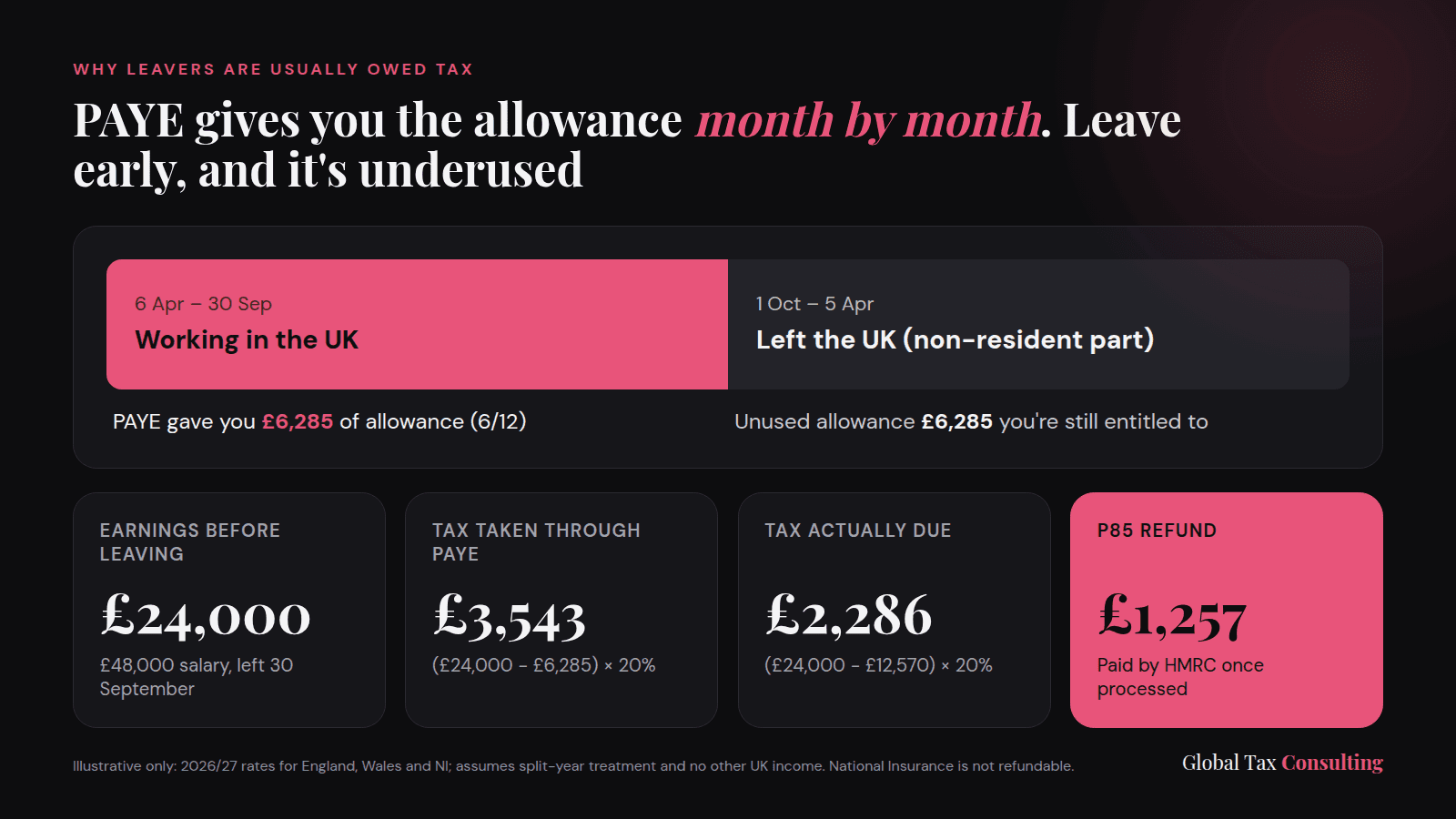
Image 2 — why leavers are usually owed tax
Example: leaving on 30 September
Priya earns £48,000 a year and leaves the UK on 30 September 2026.
She earned £24,000 in the UK part of the 2026/27 tax year.
PAYE gave her six months of allowance (£6,285) and deducted £3,543 in tax.
With the full £12,570 allowance, her actual liability is £2,286.
Her P85 refund is £1,257.
The example uses 2026/27 rates for England, Wales and Northern Ireland, and assumes split-year treatment applies and Priya has no other UK income. The later in the tax year you leave, the smaller the refund tends to be. National Insurance isn't refunded, because it's calculated pay period by pay period.
Want a quick estimate for your own move? Try our leaving the UK tax calculator.
How to fill in and submit a P85
What will you need before you start? Gather these first:
your National Insurance number and last UK address
your departure date and overseas address
Parts 2 and 3 of your P45, if you have one
details of whether you'll keep a UK home, work full-time abroad, still be paid in the UK, and how many days you expect to spend in the UK over the next three years
If you're continuing to work for a UK company from abroad, you won't have a P45. You should still fill in the P85.
Claiming online
You can claim online once you've left the UK, using your HMRC sign-in details. You'll get a reference number to track progress. If you haven't left yet, you can't use the online route.
Claiming by post
Claim by post if you haven't left yet or would rather not use the online service. You complete the form on screen (you can't save your progress), print it, attach your P45 or explain why you don't have one, and send it to:
Pay As You Earn
HM Revenue and Customs
BX9 1AS
👉 HMRC guidance: Tax if you leave the UK to live abroad
Answer the residence questions carefully
The questions about your UK home and planned UK days aren't box-ticking. They feed directly into HMRC's view of whether you're non-resident and whether split-year treatment applies. Make sure your answers match your actual position under the Statutory Residence Test. If you're unsure, read our Statutory Residence Test 101 first.
What happens after you submit
How is the refund paid? If you're due money, HMRC pays you or a nominee you've chosen. HMRC's guidance says it posts a payable order to be paid into a UK bank account in your name or your nominee's name.
Keep your UK bank account open until the refund arrives. HMRC won't pay currency conversion or overseas transfer fees.
Processing times vary. Use HMRC's tool to check when to expect a reply.
If you're still paid through UK payroll while working abroad, HMRC may issue an NT (no tax) code to your employer once it accepts you're non-resident with no UK workdays. See working remotely abroad for a UK company.
👉 HMRC tool: Check when you can expect a reply from HMRC
Common P85 mistakes
What slows refunds down or causes problems later? These come up again and again:
Filing a P85 and a tax return for the same year without needing both. It creates duplicate records and slows things down.
Treating the P85 as proof of non-residence. Your status comes from the Statutory Residence Test, not from the form. A P85 won't protect you if you spend too many days in the UK later.
Closing your UK bank account too early, then struggling to bank a UK payable order.
Forgetting ongoing UK income. UK rent needs the non-resident landlord scheme and usually a tax return. A UK pension needs a treaty claim for an NT code. See UK pension tax when living abroad.
Assuming the P85 covers National Insurance. It doesn't. Voluntary contributions for periods abroad are applied for separately, and voluntary Class 2 is no longer available for time spent abroad from 6 April 2026, so Class 3 is now the main route.
Leaving it too late. You generally have four years from the end of the tax year to claim back overpaid tax.
👉 HMRC guidance: National Insurance if you go abroad
For the other forms you may meet along the way, including the 64-8, NRL1, CF83 and DT-Individual, see our guide to HMRC forms for expats.
Frequently asked questions
What is a P85 form and do I need to complete one?
A P85 is the form that tells HMRC you are leaving the UK to live abroad, or to work abroad for at least a full tax year. It also lets you claim back Income Tax you overpaid through PAYE. You usually need one if you were employed and do not file a Self Assessment tax return. You usually do not need one if you file Self Assessment, because you tell HMRC through the SA109 residence pages of your return instead. A P85 does not decide whether you are UK tax resident; the Statutory Residence Test does.
Can I submit a P85 before I leave the UK?
Yes, but only by post. HMRC's online P85 service is only available once you've left, so if you're still in the UK you need to complete the print-and-post version.
How long does a P85 refund take?
It varies with HMRC's workload. You can track an online claim with the reference number you're given, and use HMRC's "check when you can expect a reply" tool for current processing times.
Do I need a P85 if I already file Self Assessment?
Usually not. If you're sending a Self Assessment return for the tax year you leave, you report your departure on the SA109 residence pages instead. The exception is working full-time abroad for a UK employer for a full tax year, where HMRC asks for both.
Does submitting a P85 make me non-resident?
No. The P85 tells HMRC about your circumstances, but your residence status is decided each tax year by the Statutory Residence Test.
Can I claim a P85 refund for an earlier tax year?
Generally yes, as long as you claim within four years of the end of the tax year you left. After that, the overpaid tax is usually lost.
work with GTC
Get your position confirmed in writing
Global Tax Consulting advises internationally mobile individuals on residency reviews, UK tax planning and tax return preparation. Tell us where you are and what you earn, and you will have a fixed fee and a clear view of your UK tax position.
⭐ 5★ rated