
The SA100 form is the main UK Self Assessment tax return. It's the same return whether you fill it in on paper or file it online, and for the 2025/26 tax year (6 April 2025 to 5 April 2026) it runs to eight pages. On its own it covers the basics: interest, dividends, pensions, benefits and tax reliefs.
Everything else goes on supplementary pages. If you've left the UK, arrived in the UK, or live abroad with UK income, you'll almost always need the SA109 residence pages, and HMRC's own online service can't file them.
This guide covers what's on the SA100, the supplementary pages expats need, the deadlines, the paper route and Making Tax Digital.
If you'd like this checked for your own situation, see our UK tax returns for expats service.
What is the SA100 form?
What does the SA100 actually do? It's the core of your Self Assessment tax return: the form HMRC uses to work out your tax for one tax year.
Without any supplementary pages, the eight-page main return deals with:
UK bank and building society interest, and UK dividends
the State Pension, other UK pensions, annuities and taxable state benefits
other UK income that doesn't have its own pages
tax reliefs: pension contributions, charitable giving, Blind Person's Allowance
Student Loan repayments, the High Income Child Benefit Charge and Marriage Allowance
repayment details, your tax adviser and your signed declaration
Page two asks nine yes or no questions about your year, and each "yes" means a set of supplementary pages. Whether you have to file at all is covered in do I need to file a UK tax return?
👉 HMRC form: SA100 tax return and notes (2025 to 2026)
SA100 supplementary pages: the full list
Which extra pages are there? Ten sets cover almost everyone, and you only complete the ones that apply to you.
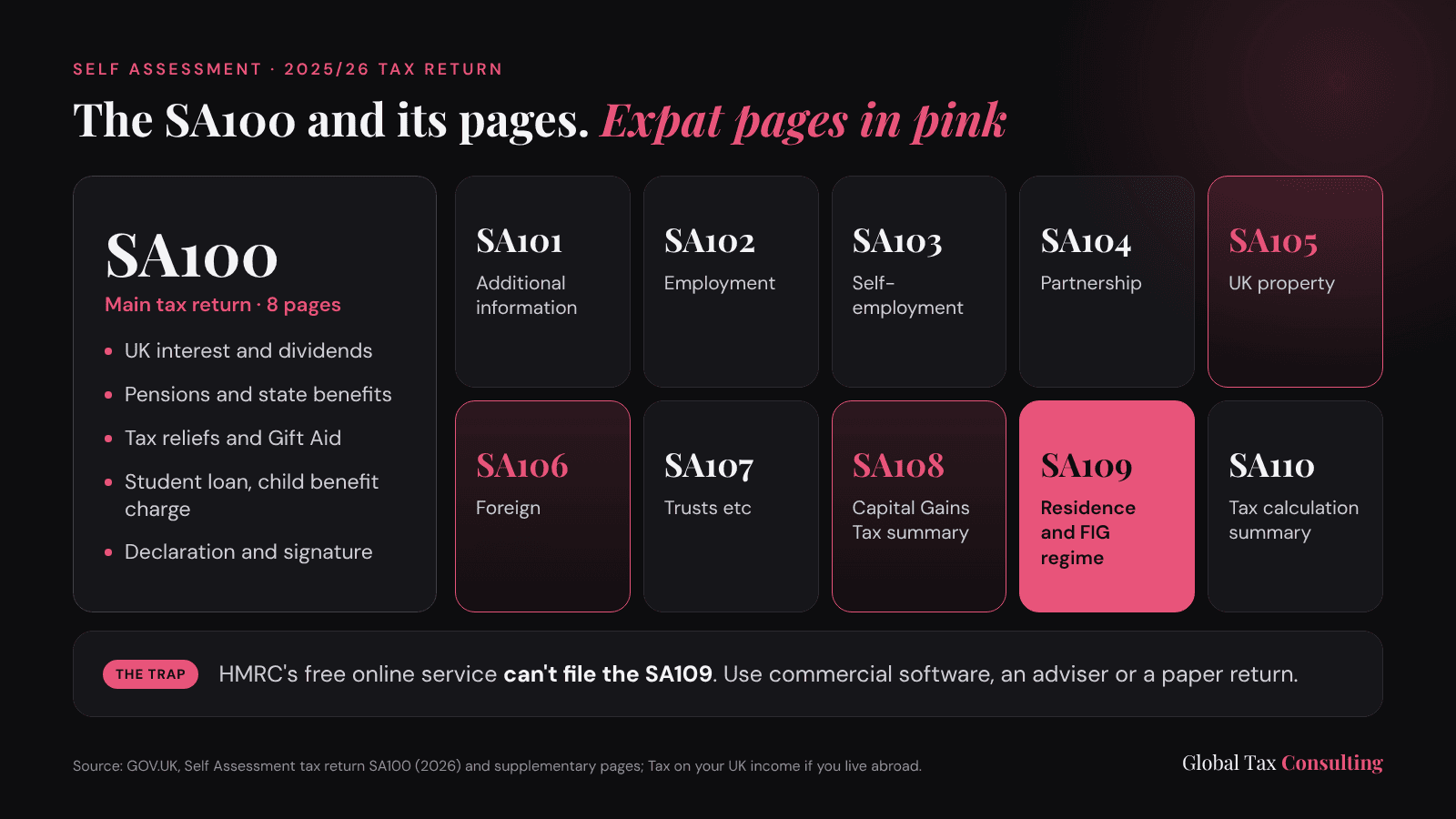
Image 1 — The SA100 and its supplementary pages
SA100 supplementary pages for 2025/26
Pages | Name | Who needs them |
|---|---|---|
SA101 | Additional information | Less common income and reliefs, such as share schemes and redundancy lump sums |
SA102 | Employment | Employees and directors, one page per job |
SA103S or SA103F | Self-employment (short or full) | Sole traders with turnover over £1,000 |
SA104S or SA104F | Partnership (short or full) | Partners in a business partnership |
SA105 | UK property | UK rental income over £1,000 |
SA106 | Foreign | UK residents with overseas income or foreign tax to claim |
SA107 | Trusts etc | Income from trusts, settlements and estates |
SA108 | Capital Gains Tax summary | Disposals over £50,000, gains over £3,000, losses and claims |
SA109 | Residence and foreign income and gains (FIG) regime etc | Non-residents, split years, FIG and treaty claims |
SA110 | Tax calculation summary | Only if you work out your own tax |
There are also specialist pages, such as the SA102M for ministers of religion and the SA103L for Lloyd's underwriters.
The SA109 has a new name. Until 2024/25 it was "Residence, remittance basis etc". It changed when the FIG regime replaced the remittance basis on 6 April 2025. For forms outside the return, such as the NRL1, see our guide to HMRC forms for expats.
The SA100 pages expats need
SA109: residence and the FIG regime
Who needs the SA109? HMRC's notes say to complete it if you're not UK resident, if you became UK resident during the year, or if you're claiming split-year treatment, the FIG regime or Overseas Workday Relief. Its four pages cover:
Your residence status. You give your UK days, ties and workdays under the Statutory Residence Test.
Split-year treatment. You tick the claim and give the date the UK part of the year begins or ends. See split-year treatment.
Personal allowance for non-residents. You claim it here, either under a double tax treaty or on another basis such as being a British or EEA citizen.
Dual residence and treaty relief. You name the other countries you were resident in and enter the relief claimed. See dual tax residency.
FIG regime claims. Separate claims for foreign income and for foreign gains.
Overseas Workday Relief. Relief for new arrivals on pay for work done abroad. An election comes first, then the claim.
👉 HMRC form: SA109 Residence and foreign income and gains (FIG) regime etc
SA106: foreign income
Who needs the SA106? UK residents with overseas interest, dividends, pensions or rental income. It's also where you claim Foreign Tax Credit Relief for tax paid abroad on the same income.
Two points are easy to miss. If your only foreign income is untaxed interest of up to £2,000, dividends of up to £500, or both, it can go on the main return instead, unless you're claiming FIG relief on it.
And HMRC's notes say that if you're resident abroad and completing the SA109, you shouldn't complete the SA106. That's aimed at non-residents, whose overseas income isn't taxed here. If you're UK resident and filing the SA109 for a split-year or FIG claim, your foreign income still goes on the SA106. Our guide to UK tax on foreign income covers what's taxable.
SA105: UK property
Do landlords abroad still file? Yes. UK rent stays taxable in the UK wherever you live, and GOV.UK says non-resident landlords need to declare it on a tax return unless HMRC tells them not to. The SA105 has a box for tax your letting agent or tenant deducted under the non-resident landlord scheme, so you get credit for it. Overseas rental property goes on the SA106 instead.
👉 HMRC form: SA105 UK property
SA108: capital gains
What if you already filed a 60-day return? You still report the sale on the SA108. The page has boxes for the gain and for the tax already charged on your 60-day UK property return, and a separate section for non-residents' gains on UK property and land.
👉 HMRC form: SA108 Capital Gains Tax summary
SA102 and SA101: employment
What if you worked partly abroad? Your pay and the tax deducted go on the SA102. If part of that pay isn't taxable in the UK because you were non-resident or in the overseas part of a split year, the deduction is claimed on the SA101.
Can you file the SA109 online?
Can HMRC's free online service handle the residence pages? No. GOV.UK says you can't use HMRC's online services to report your income if you're non-resident. You have three options:
Commercial software. Buy a product that supports the SA109 and file online by 31 January. HMRC's supplier list shows which pages each product covers.
A paper return. Post the SA100, the SA109 and your other pages so they arrive by 31 October.
A tax adviser. Agents file online with their own software.
The same applies if you're UK resident but need the SA109 for a split-year, FIG or treaty claim.
What if you've missed the paper deadline? For 2025/26 it was 31 October 2026, so a paper return posted now is late. GOV.UK's advice is to file online instead, which you can do with commercial software or through an adviser until 31 January 2027.
👉 GOV.UK: Tax on your UK income if you live abroad
👉 GOV.UK: Commercial software suppliers for Self Assessment
Which SA100 pages do I need?
Which pages go with which situation? These are the usual starting points. Add pages for any other income.
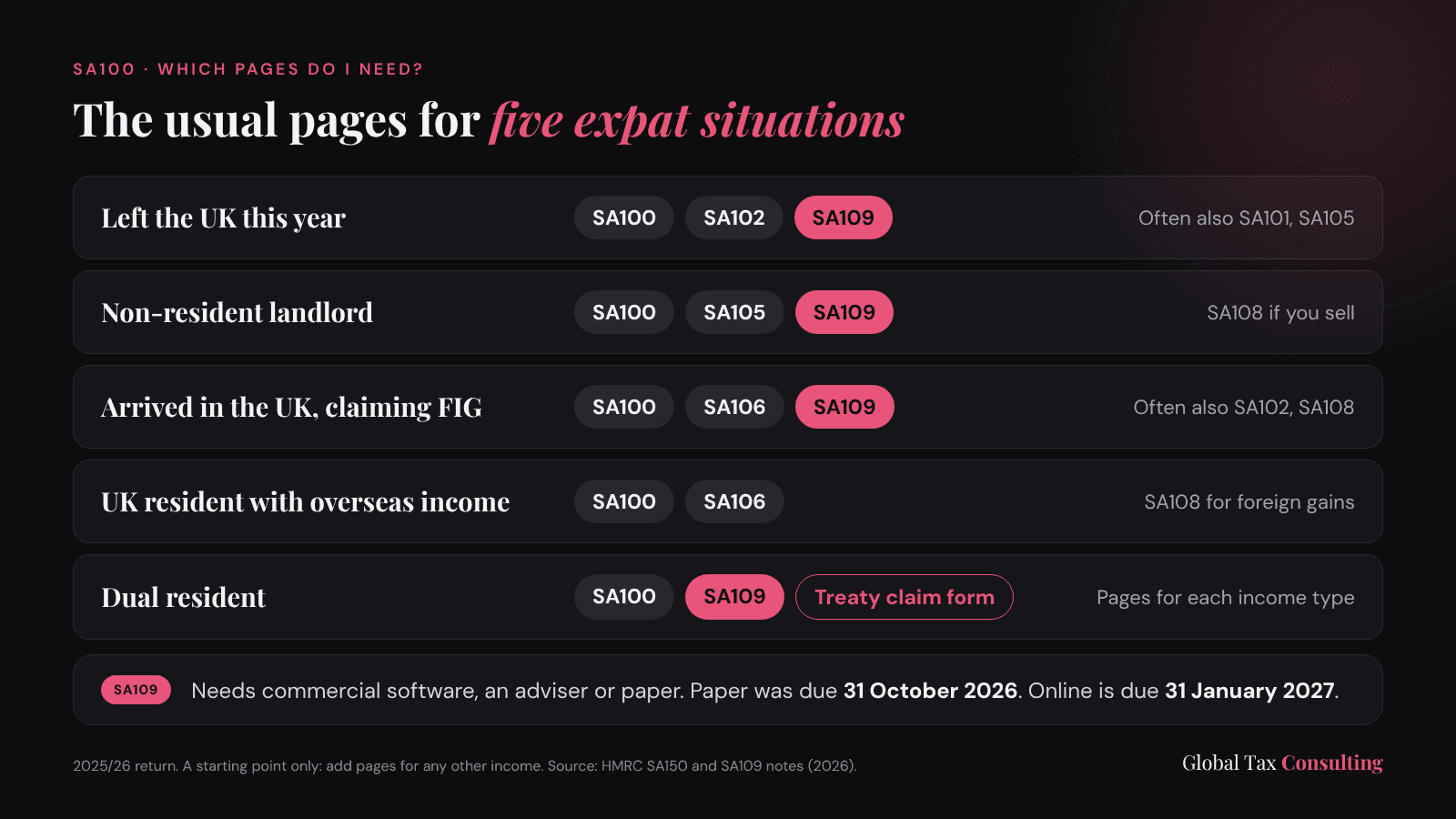
Image 2 — Which SA100 pages you need, by situation
SA100 pages by situation
Your situation | Usual pages | Often also |
|---|---|---|
Left the UK this year | SA100, SA102, SA109 | SA101, SA105 if you let your home |
Non-resident landlord | SA100, SA105, SA109 | SA108 if you sell |
Arrived in the UK, claiming FIG | SA100, SA106, SA109 | SA102, SA108 for foreign gains |
UK resident with overseas income | SA100, SA106 | SA108 for foreign gains |
Dual resident | SA100, SA109 and a treaty claim form | Pages for each type of income |
Worked example: Daniel leaves for Dubai
Daniel leaves his UK job and moves to Dubai on 31 August 2025 to start a new job with a local employer. He qualifies for split-year treatment.
From 6 September he lets his UK flat for £1,200 a month: seven months and £8,400 of rent in 2025/26. After £1,400 of expenses, his rental profit is £7,000.
His 2025/26 return is the SA100, the SA102 for his UK job up to August, the SA105 for the £7,000 profit, and the SA109 for the split-year claim.
His Dubai salary isn't taxable in the UK, as it's earned in the overseas part of the year with no UK workdays.
Because he needs the SA109, he can't use HMRC's own online service. The paper deadline was 31 October 2026, so he now files with commercial software or through an adviser by 31 January 2027.
SA100 deadlines for the 2025/26 tax return
When is the SA100 due? The SA100 paper form deadline is three months earlier than the online one, and HMRC must have received the return by then. For 2025/26, the October dates have now passed.
Key dates for the 2025/26 return
Date | What's due |
|---|---|
5 October 2026 | Tell HMRC you need to file, if you haven't filed before |
31 October 2026 | Paper SA100 received by HMRC |
30 December 2026 | Online return, if you have PAYE income and want a bill under £3,000 collected through your tax code |
31 January 2027 | Online return, tax for 2025/26, first payment on account for 2026/27 |
31 July 2027 | Second payment on account for 2026/27 |
Missed 5 October? Register anyway. GOV.UK says HMRC then sets a filing deadline three months from the date on its letter, and the tax is still due by 31 January 2027.
Payments on account are advance payments towards next year's bill. They aren't due if your last bill was under £1,000, or if more than 80% of your tax was collected at source.
What if you're late? There's a £100 penalty straight away, £10 a day after three months, and more at six and twelve months, plus interest and late payment penalties.
👉 GOV.UK: Self Assessment tax return deadlines
How to get and send a paper SA100
Will HMRC post you a form? Not usually. It stopped automatically sending out blank paper returns in April 2020. You download the SA100 and each set of supplementary pages from GOV.UK, or phone HMRC and ask for a return.
Where does it go?
If you live in the UK: Self Assessment, HM Revenue and Customs, BX9 1AS, United Kingdom.
If you live outside the UK: HM Revenue and Customs, Benton Park View, Newcastle upon Tyne, NE98 1ZZ, United Kingdom.
Sign and date the declaration yourself. HMRC sends back unsigned returns, and returns with supplementary pages missing.
👉 GOV.UK: Self Assessment forms ordering
Making Tax Digital and the SA100
Does Making Tax Digital replace the SA100? For some people, yes, but not for 2025/26, which everyone still files as a normal return. Since 6 April 2026, sole traders and landlords whose qualifying income was over £50,000 in 2024/25 keep digital records, send quarterly updates and submit their year-end return through Making Tax Digital software. The threshold falls to £30,000 from April 2027, based on 2025/26, and to £20,000 from April 2028.
Qualifying income is self-employment and property income before expenses. If you're non-resident, foreign rental income doesn't count. If you're UK resident, it does.
How does it affect landlords abroad? If your 2024/25 return included the SA109, you're automatically exempt for 2026/27. If you first need the SA109 for 2025/26 or 2026/27, you can apply for the same exemption. From 2027/28, HMRC's guidance says you'll need to join if your qualifying income was over £30,000 in 2025/26. Anyone without a National Insurance number before the start of the tax year is exempt.
👉 GOV.UK: Exemptions from Making Tax Digital for Income Tax
Common SA100 mistakes expats make
Starting in HMRC's free online service. There's no SA109 in it, and by the time you find out the paper deadline may have passed.
Working to 31 January for a paper return. Paper is due by 31 October. After that, only an online return is on time.
Ticking non-resident when you mean split year. Split-year treatment only applies in a year you're UK resident. HMRC's notes say not to tick the non-resident box as well.
Leaving a UK property sale off the return. A 60-day return doesn't replace the SA108. The gain and the tax already charged still go on it.
Frequently asked questions
What is an SA100 form?
The SA100 is the main UK Self Assessment tax return for individuals. It covers one tax year and reports income such as interest, dividends and pensions, along with tax reliefs. Employment, rent, foreign income and capital gains go on supplementary pages attached to it.
Can I file the SA100 and SA109 online?
You can file the SA100 online, but HMRC's own free service doesn't include the SA109 residence pages. If you need the SA109, you file online using commercial software that supports it or through a tax adviser, or you post a paper return.
What is the SA100 paper form deadline?
For the 2025/26 tax year, HMRC had to receive a paper SA100 by 31 October 2026. The online deadline is 31 January 2027, so if you missed the paper date, file online instead.
Where do I send my SA100 if I live abroad?
GOV.UK says to post it to HM Revenue and Customs, Benton Park View, Newcastle upon Tyne, NE98 1ZZ, United Kingdom. The return has to arrive by the deadline, so allow for international post.
Which SA100 supplementary pages do non-residents need?
Nearly always the SA109, which states your residence status and claims any personal allowance you're entitled to. Add the SA105 for UK rental income, the SA102 for UK employment and the SA108 for gains on UK property.
work with GTC
Get your position confirmed in writing
Global Tax Consulting advises internationally mobile individuals on residency reviews, UK tax planning and tax return preparation. Tell us where you are and what you earn, and you will have a fixed fee and a clear view of your UK tax position.
⭐ 5★ rated