
If you've left the UK but still own shares in a UK company, or keep savings in UK banks, one rule decides most of your UK tax bill: the disregarded income limit. It caps the UK tax on certain investment income at the tax already deducted at source. Because the UK doesn't deduct tax from dividends or bank interest, that cap is usually nil.
For a shareholder in a UK company, that can mean taking dividends with no UK tax at all. But it comes with conditions, and three changes from 6 April 2026 make the traps sharper than they were.
This guide explains what counts as disregarded income, how HMRC works out the limit, what changed in April 2026, and the conditions that decide whether it works for you.
If you need help with UK exit planning, feel free to check out our leaving the UK services.
What is disregarded income?
What does "disregarded" actually mean? If you're not UK resident, your UK tax on all your income can't be more than two things added together:
Tax on your other income: the tax due on everything that isn't disregarded income, with no personal allowance.
Tax deducted at source: the tax, if any, already taken from your disregarded income.
HMRC's list of disregarded income includes:
Savings income: interest from UK banks and building societies, and National Savings and Investments.
Investment income: dividends from UK companies and income from unit trusts.
Certain benefits: the State Pension and some other social security benefits.
Annuities: taxable income from purchased life annuities, but not annuities from personal pension schemes.
What isn't disregarded? UK rental income, UK employment income, trading profits, and workplace or private pensions are all taxed in the normal way. A share of partnership investment income doesn't qualify either.
👉 HMRC helpsheet: HS300 Non-residents and investment income
How HMRC works out your tax: two calculations
Do you have to claim the limit? No. HMRC runs two calculations and charges you whichever is lower:
Calculation A, the normal basis: all your UK income is taxed as usual, with your personal allowance if you're entitled to one.
Calculation B, the disregarded basis: disregarded income is left out, apart from any tax deducted at source, and you get no personal allowance.
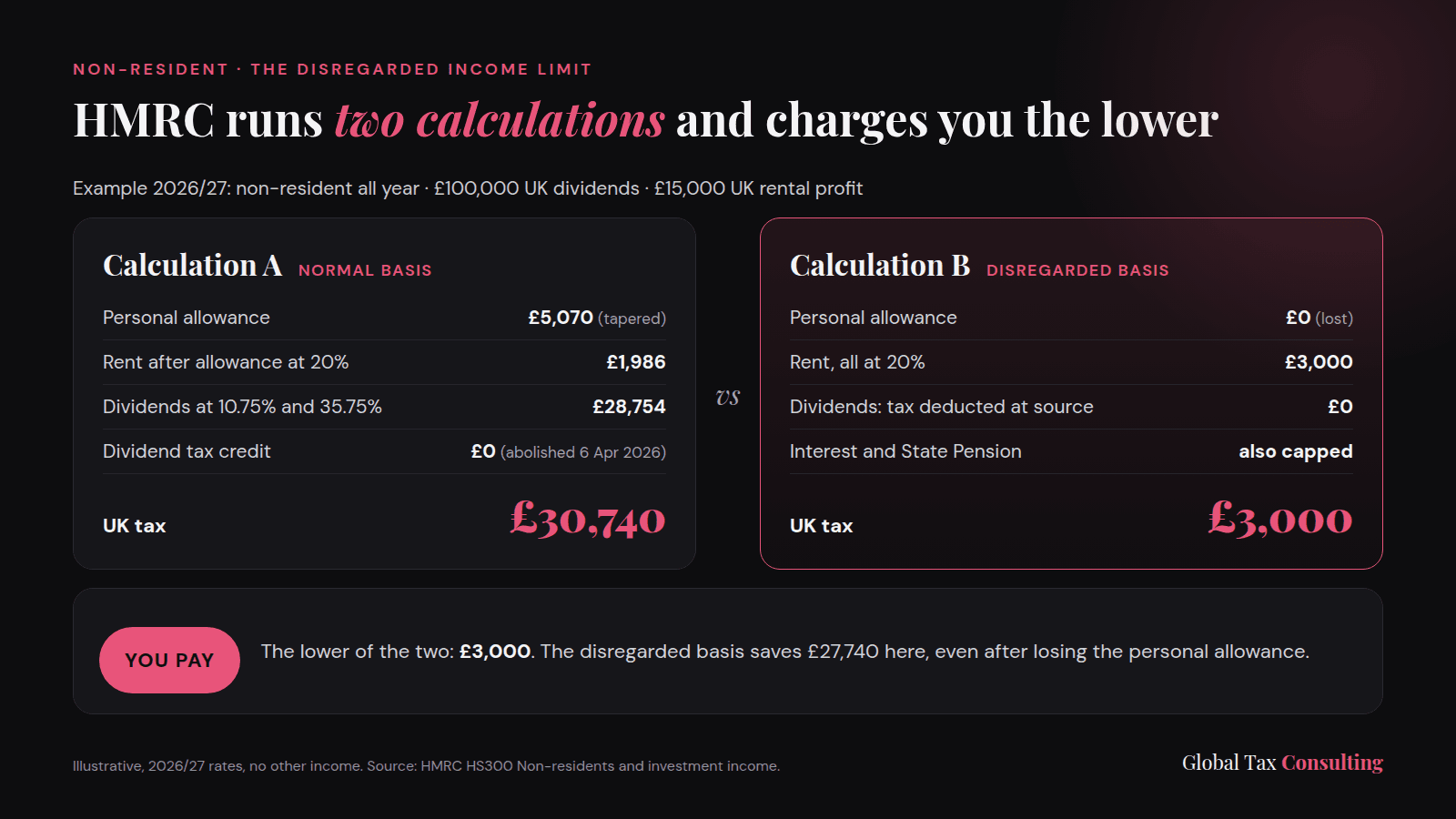
Image 1 — HMRC charges the lower of two calculations
Worked example: dividends and rent
Priya lives in Dubai and is non-resident for the whole of 2026/27.
She takes £100,000 of dividends from her UK company and has £15,000 of UK rental profit.
Calculation A taxes the rent and dividends normally. Her personal allowance tapers to £5,070, and the bill comes to about £30,740.
Calculation B taxes only the rent, all at 20% with no allowance, which is £3,000. No tax was deducted from the dividends, so they add nothing.
Priya pays £3,000. The disregarded basis saves her £27,740, even though she loses her personal allowance.
If your UK income is mainly rent or a UK pension and your dividends are small, the normal basis can come out lower. That's why the comparison is made every year.
What changed from 6 April 2026?
Why does 2026/27 look different? Three changes from the 2025 Budget affect non-residents with UK investment income:
Higher dividend rates. Dividends are now taxed at 10.75% in the basic rate band, 35.75% in the higher rate band and 39.35% above that. The gap between the normal and disregarded bases is wider than before.
The dividend tax credit has gone. Non-residents used to get a notional 8.75% tax credit on UK dividends. It was abolished for dividends received from 6 April 2026, which makes the normal calculation more expensive for anyone with dividends.
Temporary non-residence now catches more. Dividends paid out of profits the company earned after you left used to be protected. From 6 April 2026 they're caught too (see below).
Rates on savings and property income also rise by two percentage points from April 2027, so rental income in Calculation B will cost more from 2027/28.
The three conditions that decide whether it works
Disregarded income sounds simple, but three conditions decide whether it works in practice. Getting any of them wrong can be expensive.
1. You lose your personal allowance
Whenever the disregarded basis wins, you have no personal allowance for that year. Every pound of non-disregarded income, such as UK rent, is taxed from the first pound. If you have a large UK property portfolio alongside your shares, run both calculations before you plan around the dividends.
2. You must be non-resident for the whole tax year
The limit applies only in a tax year for which you're not UK resident. It doesn't apply in the overseas part of a split year, so dividends taken after you leave, but in the same tax year, are taxed at normal UK rates.
In practice, that means waiting until the first full tax year you're non-resident before taking a large dividend. See our guides to split-year treatment and the Statutory Residence Test.
3. You must stay away for more than five years
The temporary non-residence rules stop people leaving briefly, taking tax-free dividends and coming straight back. They apply if you were UK resident in at least four of the seven tax years before you left.

Image 2 — the five-year window, now wider from April 2026
What's caught: dividends from close companies, which covers most owner-managed businesses.
What happens: if you return within five years, those dividends are taxed as if you received them in the year you come back.
What changed: from 6 April 2026, the exemption for dividends paid from profits earned after you left has gone. Relief is now given for foreign tax you paid on the dividend.
See our guide to the temporary non-residence rules for how the five years are counted.
👉 HMRC guidance: RDR3 Statutory Residence Test, including temporary non-residence
What about your new country?
Does 0% UK tax mean 0% tax overall? Not necessarily. Your new country of residence decides whether it taxes the dividend. A genuinely low overall rate usually needs one of these:
No income tax: such as the UAE. See our guide to moving to the UAE.
A territorial system: countries that don't tax foreign-source income, or only tax it when it's brought in.
A favourable regime: special regimes for new residents that exempt foreign dividends for a period.
A double tax treaty rarely stops your new country taxing a UK dividend. Most treaties leave that to the country you live in. See our guides to low-tax countries for expats and how double tax treaties work.
When does the disregarded basis make sense?
Who benefits most? The strategy works best when all of these apply:
A large dividend: you plan to extract significant profits from a UK company.
A full non-resident year: the dividend is paid in a tax year you're non-resident for from start to finish.
A long stay abroad: you're committed to staying non-resident for more than five years.
A low-tax destination: your new country doesn't tax the dividend, or taxes it lightly.
Limited other UK income: losing the personal allowance costs little.
How to report it
Do you need to file a return? If your only UK income is disregarded income and HMRC hasn't asked you to file, you often don't. If you have other UK income, such as rent, you file a return with the SA109 residence pages, and the lower of the two calculations applies.
HMRC's free online service can't file the SA109, so you'll need commercial software or a paper return. See do I need to file a UK tax return and our overview of what the UK taxes once you've left.
👉 HMRC guidance: Tax on your UK income if you live abroad
Frequently asked questions
What income counts as disregarded income?
Interest from UK banks and building societies, dividends from UK companies, unit trust income, National Savings and Investments income, the State Pension and certain other benefits, and purchased life annuities. UK rent, employment income and private pensions don't count.
Do non-residents pay UK tax on UK dividends?
Usually not. The disregarded income limit caps UK tax on dividends at the tax deducted at source, and UK companies don't deduct tax. The trade-off is losing your personal allowance for the year.
Can I use the disregarded income rules in the year I leave the UK?
No. The limit only applies in a tax year for which you're non-resident. It doesn't apply in the overseas part of a split year, so dividends paid after you leave in that year are taxed normally.
Is the State Pension disregarded income?
Yes. The State Pension is on HMRC's list, so UK tax on it is capped at the tax deducted, which is usually nil. You lose your personal allowance if the disregarded basis applies, and your new country may tax the pension instead.
What happens if I return to the UK within five years?
Dividends from a close company that you received while non-resident are taxed as if received in the year you return. From 6 April 2026 this includes dividends paid from profits earned after you left, with credit for foreign tax paid.
work with GTC
Get your position confirmed in writing
Global Tax Consulting advises internationally mobile individuals on residency reviews, UK tax planning and tax return preparation. Tell us where you are and what you earn, and you will have a fixed fee and a clear view of your UK tax position.
⭐ 5★ rated