
Moving to the UAE from the UK usually means moving to a country with no personal income tax. That's a real advantage, but 0% in Dubai or Abu Dhabi doesn't mean 0% in the UK. HMRC keeps its own rules, and they decide how much of the benefit you actually get.
Most of the UK tax that people moving to the UAE end up paying comes from three things: staying UK resident without realising it, UK income that stays taxable wherever you live, and coming back within five years.
This guide covers how UAE tax residence and the treaty certificate work, how to break UK residence, what HMRC still taxes, UK pensions, selling your UK home, and the UK filings for the year you move.
When are you tax resident in the UAE?
How does the UAE decide who's tax resident? Since 1 March 2023, an individual is UAE tax resident under Cabinet Decision No. 85 of 2022 if any of these apply:
Primary home and centre of interests: your usual or primary place of residence, and the centre of your financial and personal interests, are in the UAE.
183 days: you're in the UAE for 183 days or more in a 12-month period.
90 days, plus: you're in the UAE for 90 days or more in a 12-month period, hold a UAE residence permit or UAE or GCC nationality, and have a permanent home or a job or business in the UAE.
With no income tax, UAE residence matters mainly for one document: a Tax Residency Certificate from the Federal Tax Authority (FTA). That's what you show HMRC to claim benefits under the UK-UAE treaty.
UK-UAE double tax treaty: why not every UAE resident can use it
Which certificate do you need? The FTA issues two kinds. A domestic certificate can be based on any of the three routes. A certificate for treaty purposes is the one HMRC wants to see, and in practice the FTA looks for 183 days of presence in the 12-month period it covers.
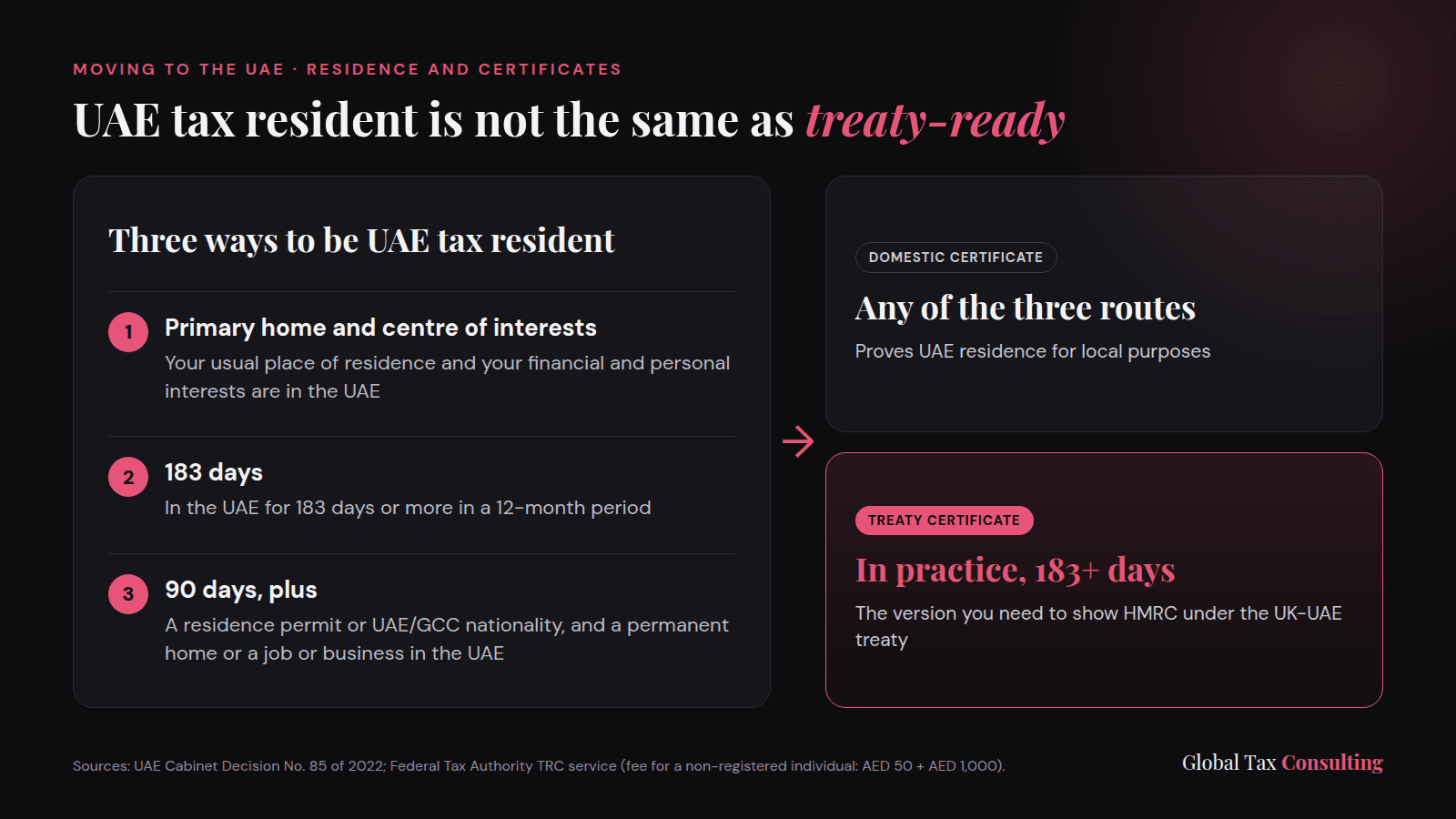
Image 1 — UAE resident versus treaty-ready
Three ways to be UAE tax resident | What it requires |
|---|---|
1. Primary home and centre of interests | Your usual place of residence and your financial and personal interests are in the UAE |
2. 183 days | In the UAE for 183 days or more in a 12-month period |
3. 90 days, plus | A residence permit or UAE/GCC nationality, and a permanent home or a job or business in the UAE |
Certificate | Based on | What it does |
|---|---|---|
Domestic certificate | Any of the three routes | Proves UAE residence for local purposes |
Treaty certificate | In practice, 183+ days | The version you need to show HMRC under the UK-UAE treaty |
It only covers the past: you can't get a certificate for a period that hasn't happened yet.
It costs money: for an individual not registered with the FTA, the fee is AED 50 to apply plus AED 1,000 to issue.
It's issued per period: if you rely on the treaty every year, you'll need a certificate every year.
So someone who meets the 90-day route is UAE tax resident, but may not be able to prove it to HMRC. If your UK planning depends on the treaty, plan for 183 days in the UAE in each year you need it.
Income | Position once you hold a UAE treaty residence certificate |
|---|---|
Workplace and personal pensions | Taxable only in your country of residence. Your provider deducts UK tax until HMRC issues an NT code |
Government service pensions | Stay taxable in the UK |
UK rental income | Taxed in the UK |
Gains on UK property | Taxed in the UK |
Salary for days worked in the UK | Stays taxable in the UK |
👉 UAE Federal Tax Authority: Tax Residency Certificates
👉 UAE Cabinet Decision No. 85 of 2022 on tax residence
How do you stop being UK resident?
This is the test that decides most UAE moves. A UAE residence visa or Emirates ID makes no difference to it. HMRC applies the Statutory Residence Test to each tax year separately.
Automatic overseas tests: fewer than 16 UK days if you were UK resident in any of the previous three tax years, fewer than 46 if you weren't, or full-time work abroad.
Full-time work abroad: an average of 35 hours a week overseas, fewer than 91 UK days, fewer than 31 UK workdays of more than three hours, and no significant break from overseas work.
Sufficient ties test: if no automatic test settles it, HMRC weighs your UK days against your family, accommodation, work, 90-day and country ties.
Worked example: the workday trap
James moves to Dubai for a full-time job in May 2026. His wife and children stay in the family home in London.
In 2027/28, he spends 60 days in the UK, including 20 days working from the London office. He meets the full-time work abroad test, so he's non-resident, whatever his ties.
If those UK workdays had been 35, he'd fail that test. With 60 UK days, a leaver needs three ties to be UK resident, and James has a family tie, an accommodation tie and a 90-day tie. He'd be UK resident for the whole year.
Fifteen extra days at a UK desk would turn a tax-free year into a fully UK-taxable one. See our guides to the Statutory Residence Test and split-year treatment.
👉 HMRC guidance: RDR3 Statutory Residence Test
What can the UK still tax once you live in the UAE?
Which UK income stays in the UK tax net? Broadly anything with a UK source. And because the UAE has nothing to credit it against, any UK tax you pay is a real cost.
UK workdays: salary for days you physically work in the UK stays UK-taxable, even when paid by a UAE employer.
UK rental income: taxed in the UK. Register for the Non-Resident Landlord Scheme to receive rent without tax deducted. UK property income rates rise by two percentage points from 6 April 2027.
UK dividends and interest: for most non-residents, the disregarded income rules cap UK tax at whatever was deducted at source, which is usually nil. From 6 April 2026, non-residents lost the notional dividend tax credit, which makes the normal calculation more expensive.
Gains on UK shares: usually outside UK tax for non-residents, unless the company is UK property-rich.

Image 2 — what the UK can still tax
UK income or gain | UK tax as a UAE resident | What to know |
|---|---|---|
Salary for UK workdays | Taxable | Keep a workday diary for every UK visit |
UK rental income | Taxable | Non-Resident Landlord Scheme; rates rise April 2027 |
UK dividends and interest | Usually nil | Capped by the disregarded income rules |
Workplace and personal pensions | Nil | UAE-only under the treaty, once you have an NT code |
Government service pensions | Taxable | Taxed only in the UK |
UK property gains | 18% / 24% | Report within 60 days of completion |
Gains on UK shares | Usually nil | Unless the company is UK property-rich |
Coming back within 5 years | Clawback | Temporary non-residence rules, wider from April 2026 |
The table assumes you are non-UK resident under the Statutory Residence Test and treaty resident in the UAE.
British nationals keep the £12,570 UK personal allowance wherever they live. See what the UK taxes after you leave.
👉 HMRC helpsheet: HS300 Non-residents and investment income
How are UK pensions taxed if you live in the UAE?
Can you draw a UK pension tax-free in Dubai? Often, yes. The UK-UAE treaty splits pensions two ways:
Workplace and personal pensions: taxable only in your country of residence. Because the UAE has no income tax, the result can be no tax in either country.
Government service pensions: civil service, armed forces, police and similar pensions stay taxable in the UK wherever you live.
Relief isn't automatic. Your provider deducts UK tax until HMRC issues an NT code, which you apply for on form DT-Individual with your UAE treaty certificate. That's another reason the 183 days matter. The UK State Pension is frozen in the UAE, so it won't rise each April. See UK pension tax when living abroad.
👉 HMRC form: DT-Individual, treaty relief on UK pensions and other income
👉 GOV.UK: UK-UAE double taxation convention
Selling your UK home after moving to the UAE
Planning to sell your former home once you've gone? Non-residents pay UK capital gains tax on UK property, and there's no UAE tax to credit it against. For 2026/27, the annual exempt amount is £3,000, and residential gains are taxed at 18% within your remaining basic rate band and 24% above it.
Private residence relief: covers the years it was your main home, plus the final nine months of ownership.
April 2015 rebasing: if you owned the property on 5 April 2015, you can usually use its value at that date.
60-day deadline: report the sale and pay any tax within 60 days of completion, even if there's nothing to pay.
See our non-resident capital gains tax guide for the calculation.
👉 HMRC: report and pay capital gains tax on UK property
Self-employed or running a business from the UAE?
Is there really no tax on business income? Individuals running a business in the UAE with turnover above AED 1 million a year must register for UAE corporate tax, charged at 9% on profits above AED 375,000. Employment income, investment income and personal property income aren't caught.
On the UK side, if you keep serving UK clients, where the work is done matters. Work performed on UK visits can be UK-taxable, and running a UK company from Dubai raises its own residence questions.
What else changes: National Insurance and inheritance tax
What happens to the rest of your UK position?
Voluntary National Insurance: since 6 April 2026, you can't pay voluntary Class 2 contributions from abroad. Class 3 is the only option, and new applicants need 10 years of UK residence or contributions.
Inheritance tax: the UAE doesn't charge it, but the UK can. If you've been UK resident for at least 10 of the last 20 tax years, your worldwide estate stays within UK inheritance tax for 3 to 10 years after you leave. From 6 April 2027, most unused pension funds come into the calculation too.
👉 HMRC guidance: inheritance tax if you're a long-term UK resident
What if you come back within five years?
This is the rule that most often undoes a UAE move. If you were UK resident in at least four of the seven tax years before you left, and you return within five years, the temporary non-residence rules tax some income and gains in the year you come back:
Close company dividends: dividends from your own company taken while in the UAE. From 6 April 2026, this includes dividends paid from profits earned after you left.
Gains on assets owned before you left: such as shares in a business you sold while abroad, taxed as if made in the year you return.
Pension withdrawals: flexible drawdown and lump sums the treaty kept out of UK tax.
If a sale or a large dividend is part of the reason for moving, plan for at least five full tax years away, and have a plan for what happens if you need to come home early.
Your UK checklist for the year you move
Keep a day and workday log for every UK visit, including travel days.
Plan for 183 UAE days in any year you'll need a treaty certificate.
Tell HMRC you've left. Use form P85 if you won't be filing a return, or the SA109 residence pages if you will.
Claim split-year treatment on your 2026/27 return if one of the cases applies.
Apply for NT codes on DT-Individual for each UK pension.
File by 31 January 2028 for 2026/27. HMRC's free online service can't file the SA109, so you'll need commercial software or an adviser.
Before you set a leaving date, see how we help people leaving the UK, and put your figures into our leaving the UK tax calculator.
For more on zero-tax and low-tax destinations, see the best low-tax countries for expats, and for the UK forms, HMRC forms for expats.
👉 HMRC: check if you need to send a Self Assessment return
How we help people moving to the UAE
Need UK tax advice before you move to Dubai? Global Tax Consulting advises people leaving the UK for Dubai and the wider UAE on their UK tax position before they go: when UK tax residence ends under the Statutory Residence Test, split-year treatment, what the UK still taxes after you leave, and the temporary non-residence rule if you return within about five years. All advice is reviewed and signed off by Emma McDermott, ATT. A leaving the UK exit plan typically costs £1,000 to £4,000, fixed before work starts.
Frequently asked questions
What are the UK tax implications of moving to Dubai?
Spending fewer than 183 days in the UK does not make you non-resident by itself. Your UK tax residence ends only when you meet the Statutory Residence Test, which also looks at your UK ties. The UAE has no personal income tax, but the UK can still tax UK-source income such as rent from UK property, and you must report a sale of UK property within 60 days. If you return to the UK within about five years, the temporary non-residence rule can tax certain gains and income from your years away.
How many days do I need in the UAE for a tax residency certificate?
For a certificate you can use under the UK-UAE treaty, the FTA in practice looks for 183 days in the UAE in the 12-month period. A domestic certificate can be issued on the 90-day route, but may not be accepted for treaty claims.
Is my UK pension tax-free in the UAE?
Workplace and personal pensions are taxable only in your country of residence under the UK-UAE treaty, so a UAE resident can receive them without tax in either country once HMRC issues an NT code. Government service pensions stay taxable in the UK.
What happens if I return to the UK within five years?
The temporary non-residence rules can tax, in the year you return, dividends from your own company and gains on assets you owned before leaving. From April 2026, this includes dividends paid from profits earned after you left.
Does the UAE have inheritance tax?
No, but UK inheritance tax can still apply. Long-term UK residents stay within UK inheritance tax on their worldwide estate for 3 to 10 years after leaving, depending on how long they lived in the UK.
work with GTC
Get your position confirmed in writing
Global Tax Consulting advises internationally mobile individuals on residency reviews, UK tax planning and tax return preparation. Tell us where you are and what you earn, and you will have a fixed fee and a clear view of your UK tax position.
⭐ 5★ rated