
The double taxation agreement between the UK and Spain decides which country can tax each type of income and gain when you have links to both. For most people it means private pensions, the State Pension, interest and share gains are taxed only where you live, while rent, property gains and government pensions stay taxable in the country they come from.
The current UK-Spain double tax treaty was signed in London on 14 March 2013 and has applied to UK Income Tax and Capital Gains Tax since 6 April 2015. It works in both directions.
This guide goes through the treaty article by article: what it covers, how residence is settled, who taxes what, how UK pensions and property are treated, and how to claim relief from HMRC. For the move itself, see our guide to moving to Spain from the UK.
If you'd like this checked for your own situation, see our international tax advice service.
What is the double taxation agreement between the UK and Spain?
Which treaty is in force? The 2013 Convention and its Protocol. It entered into force on 12 June 2014 and replaced the 1975 treaty. In the UK it took effect from 6 April 2015 for Income Tax and Capital Gains Tax, and in Spain from 1 January 2015.
Since 6 April 2023 it has been modified for UK Income Tax and Capital Gains Tax by the Multilateral Instrument (MLI), which adds a principal purpose test: a treaty benefit can be refused if getting it was one of the main purposes of an arrangement.
Which taxes does it cover?
Article 2 lists the taxes. For the UK: Income Tax, Corporation Tax and Capital Gains Tax. For Spain: income tax on individuals, corporation tax, income tax on non-residents, the capital tax (Spain's wealth tax, the Impuesto sobre el Patrimonio) and local taxes on income and capital.
Inheritance and gift taxes aren't on the list, and nor are National Insurance or Spanish social security contributions.
Residence and the tie-breaker (Article 4)
What if both countries treat you as resident? Article 4 settles it with tie-breaker tests applied in order: permanent home, centre of vital interests (where your personal and economic ties are closer), habitual abode, then nationality.
Dual residence is common in the year of a move. Spain tests residence for the whole calendar year, and the UK uses the Statutory Residence Test for a tax year running from 6 April to 5 April. The UK may give you split-year treatment, but that's a UK rule. Spain's tax agency treats you as resident or non-resident for the whole calendar year. Our guide to dual tax residency explains each test.
One trap is Spain's special regime for inbound workers, often called the Beckham Law. The Agencia Tributaria, Spain's tax agency, says people who opt into it aren't considered residents for the purposes of a double taxation agreement. If you're on that regime, don't assume the treaty protects you.
👉 Agencia Tributaria: special regime for inpatriates (Article 93)
Who taxes what under the UK-Spain double tax treaty?
How do you read the treaty? Each article deals with one type of income. "Taxable only" in one country means the other can't tax it. "May be taxed" means both can, and the country you live in gives relief. Our guide to how UK double tax treaties work has the general pattern.
UK-Spain treaty: taxing rights by income type
Income or gain | Article | Who can tax it | Limit on source country |
|---|---|---|---|
Rent and other property income | 6 | Both, country of the property first | None |
Dividends | 10 | Both | 10%, or 15% from property investment vehicles |
Interest | 11 | Residence country only | 0% |
Royalties | 12 | Residence country only | 0% |
Gains on land and buildings | 13(1) | Both, country of the property first | None |
Gains on shares in property-rich companies | 13(4) | Both | None |
Other gains, such as listed shares | 13(6) | Residence country only | Not taxed at source |
Employment income | 14 | Residence country, plus the country where you work | 183-day rule |
Directors' fees | 15 | Both, country of the company first | None |
Pensions, including State Pension | 17 | Residence country only | Not taxed at source |
Government service pensions | 18(2) | Paying country only | Nationality exception |
Other income | 20 | Residence country only | Not taxed at source |
Capital (wealth) | 21 | Both for land and property-rich shares, residence country only for most other assets | None on land |
A few of these need more detail:
Dividends: the 15% rate applies to dividends paid out of property income by a UK real estate investment trust or a Spanish SOCIMI. Dividends paid to a pension scheme are exempt at source. So are dividends to a company that controls at least 10% of the payer, unless the payer is one of those property vehicles.
Property-rich shares: Article 13(4) covers shares that derive more than 50% of their value from land in the other country. Shares that are substantially and regularly traded on a stock exchange are excluded.
Employment and the 183-day rule: pay for work done in the other country is taxable only where you live if you're present in the other country for no more than 183 days in any twelve-month period starting or ending in the tax year, your employer isn't resident there, and the cost isn't borne by a permanent establishment there.

Image 1 — Who taxes what for a Spanish resident with UK income
Who taxes it | UK income or gain |
|---|---|
Spain only (the UK gives up its right to tax) | State Pension (Article 17); workplace and personal pensions (Article 17); bank interest (Article 11); royalties (Article 12); gains on shares and most other assets (Article 13(6)) |
Both countries (the UK taxes first, Spain deducts the UK tax) | UK rental income (Article 6); gains on UK property (Article 13(1)); UK dividends, with UK tax capped at 10% or 15% (Article 10); pay for days worked in the UK (Article 14); UK directors' fees (Article 15) |
UK only (Spain exempts it, but counts it for your rate) | UK government service pensions (Article 18(2)), such as civil service, armed forces and local authority pensions. Not if you're a Spanish resident and Spanish national. |
Not covered | Inheritance and gift taxes, National Insurance and Spanish social security are outside the treaty. |
👉 GOV.UK: UK-Spain Convention, synthesised text with the MLI
UK pensions under the UK-Spain tax treaty
Which country taxes a UK pension if you live in Spain? Under Article 17, pensions and similar payments are taxable only in the country you're resident in. That covers workplace and personal pensions, and HMRC's own claim form treats the UK State Pension the same way.
Government service pensions are different. Under Article 18(2), a pension paid by the UK for service to the UK government or a local authority, such as a civil service or armed forces pension, is taxable only in the UK. The exception, in Article 18(2)(b), is where you're resident in Spain and a Spanish national. The pension is then taxable only in Spain.
What if you hold both nationalities? The treaty text doesn't deal with dual nationals. HMRC's notes to the claim form limit the exception to a Spanish national and resident "without also being a UK national", so take advice before you claim.
Spain exempts a UK government pension but still counts it when setting the rate on your other income. This is called exemption with progression, and it comes from Article 22(1)(b).
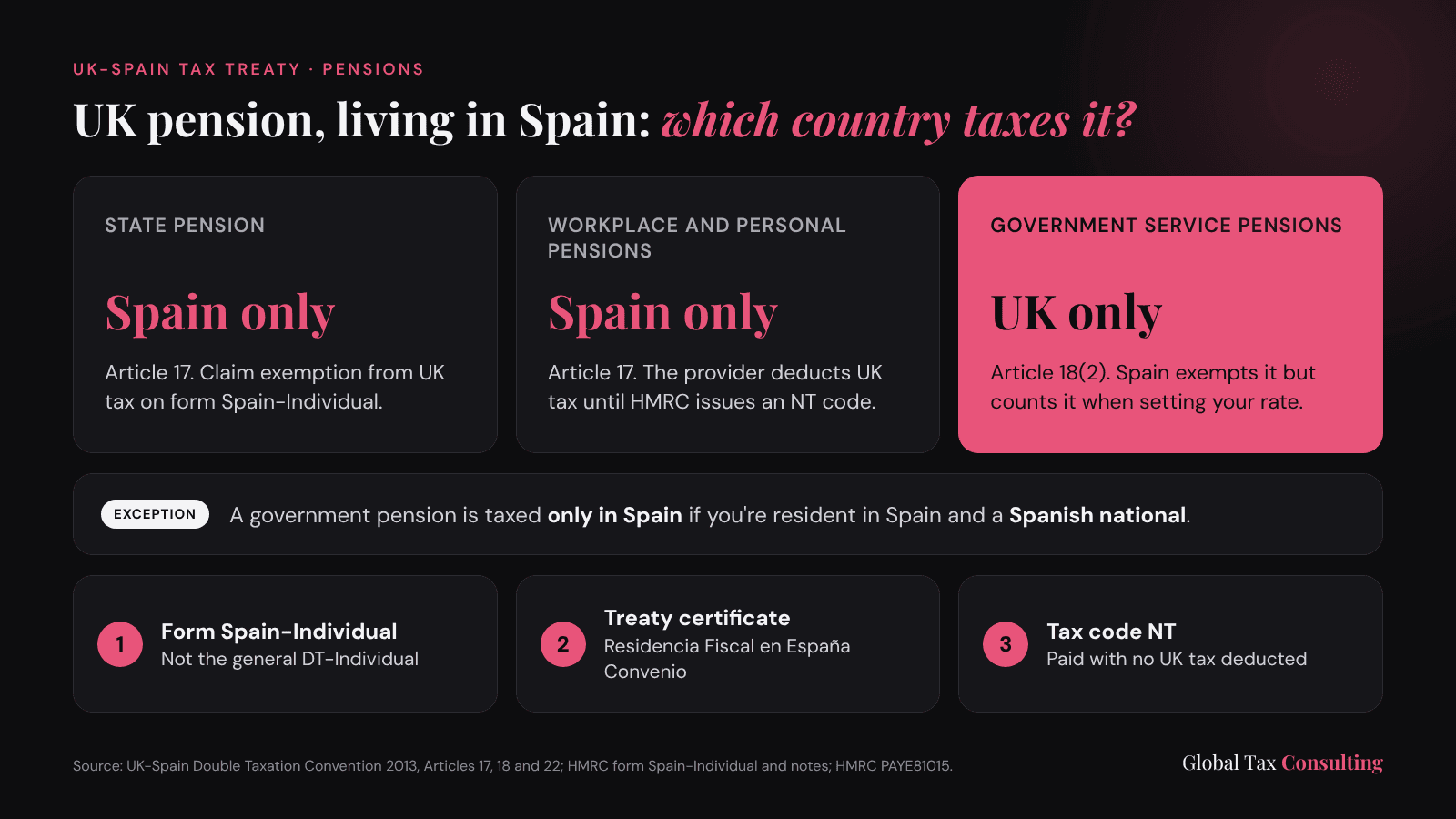
Image 2 — UK pension types and which country taxes each
UK pension type | Who taxes it | Detail |
|---|---|---|
State Pension | Spain only | Article 17. Claim exemption from UK tax on form Spain-Individual. |
Workplace and personal pensions | Spain only | Article 17. The provider deducts UK tax until HMRC issues an NT code. |
Government service pensions | UK only | Article 18(2). Spain exempts it but counts it when setting your rate. Exception: taxed only in Spain if you're resident in Spain and a Spanish national. |
How to stop UK tax being deducted
Is the exemption automatic? No. Pension providers deduct UK tax under PAYE until HMRC tells them to stop. Spain has its own claim form, so you don't use the general DT-Individual.
Complete form Spain-Individual. It covers the State Pension, pensions, purchased annuities, interest and royalties, with a section to reclaim tax already deducted.
Attach the right certificate. HMRC wants the Agencia Tributaria's treaty certificate, "Residencia Fiscal en España Convenio". The general residence certificate isn't accepted.
Wait for the code. Once HMRC accepts the claim, the payer is told to pay without deduction, normally under tax code NT.
👉 HMRC form: Spain-Individual and notes
👉 HMRC manual: certification by an overseas tax authority (PAYE81015)
The treaty has no separate rule for lump sums. The UK's tax-free lump sum is a UK rule that the treaty doesn't require Spain to follow, so take Spanish advice before you draw one. Our guide to the tax treatment of pension income covers the UK side.
Property: UK rent for Spanish residents, Spanish property for UK residents
Who taxes rent? Under Article 6, the country where the property is. The country you live in can tax it too, and then gives relief.
Spanish resident with a UK rental property
The UK taxes the profit. Your agent or tenant deducts basic rate tax under the Non-Resident Landlord Scheme unless HMRC approves gross payment, and you file a UK return. Spain taxes the same rent and deducts the UK tax, up to the Spanish tax on that income.
When you sell, Article 13(1) lets the UK charge non-resident capital gains tax. You must report the sale to HMRC within 60 days of completion, even if no tax is due. Spain can tax the gain too, less the UK tax.
👉 GOV.UK: Capital Gains Tax on UK property or land if you're not a UK resident
UK resident with a Spanish property
Spain taxes non-resident owners even when the property isn't let. It deems an income of 1.1% or 2% of the cadastral value (the rateable value on your IBI bill), depending on when the municipality's values were last revised.
These are the Agencia Tributaria's published rules as at October 2026. Since 1 January 2021, UK residents pay 24%, not the 19% charged to EU and EEA residents. On rent, the agency applies 24% to the gross amount, because its guidance lets only EU and EEA residents deduct expenses. Gains on a sale are taxed at 19%. The buyer withholds 3% of the price on Modelo 211, and you declare the income and gain on Modelo 210.
👉 Agencia Tributaria: consequences of Brexit for non-resident income tax
👉 Agencia Tributaria: imputed income from urban property for own use
How relief is given and how to claim it
How does the treaty remove the double charge? Article 22 sets the method. Spain deducts UK tax from the Spanish tax on the same income, capped at that Spanish tax. The UK gives credit for Spanish tax against UK tax on the same income, capped at the UK tax and at the Spanish tax the treaty allows.
The route depends on where you live:
Spanish resident, UK pension or interest: form Spain-Individual, as above.
Spanish resident filing a UK return: claim on the SA109 residence pages with the helpsheet HS304 claim form and a certificate of residence.
Dual resident, treaty resident in Spain: the same pages, with the HS302 claim form.
UK resident with Spanish income: claim foreign tax credit relief on the foreign pages of your return. To get Spain's treaty rate, send Spain an HMRC certificate of residence.
👉 HMRC helpsheet: HS304 Non-residents, relief under double taxation agreements
👉 HMRC helpsheet: HS302 Dual residents
👉 GOV.UK: apply for a certificate of residence
Worked examples
Example 1: Margaret, living in Valencia
Margaret is a British citizen, resident only in Spain. In 2026/27 she has a UK State Pension of £12,000, a private pension of £18,000, a civil service pension of £10,000 and UK rental profit of £8,000.
Spain alone taxes the State Pension and private pension. She uses form Spain-Individual to stop UK tax at source.
The UK taxes the civil service pension and the rent: £18,000 less her £12,570 personal allowance leaves £5,430, taxed at 20%, so £1,086.
Spain exempts the civil service pension but counts it for her rate. It taxes the rent, less the UK tax on it.
Example 2: Daniel, UK resident with a flat in Málaga
Daniel's flat has a cadastral value of €150,000 in a municipality where the 1.1% rate applies. He doesn't let it in 2026, so Spain deems income of €1,650 and charges 24%: €396.
The UK doesn't tax deemed income, so there's no UK tax to set the €396 against.
If he lets it for €10,000 a year with €4,000 of expenses, Spain charges 24% of the gross rent: €2,400.
The UK taxes the €6,000 profit. At the 20% basic rate for 2026/27 that's €1,200 in euro terms, fully covered by the credit. The other €1,200 of Spanish tax isn't relieved.
Common mistakes with the UK-Spain treaty
Treating a government pension like a private one. Civil service, armed forces and local authority pensions usually stay taxable in the UK.
Assuming the treaty changes your UK residence. It only limits what the UK can tax. Your status under the Statutory Residence Test, and the temporary non-resident rules if you come back, are separate questions.
Expecting relief for inheritance tax or social security. Neither is on the treaty's list of taxes, so it can't help with either.
Forgetting Spain's tax on an empty holiday home. UK residents owe it every year, now at 24%, and there's no UK tax to credit it against.
How we help people moving to Spain
Need UK tax advice before you move to Spain? Global Tax Consulting advises people leaving the UK for Spainon their UK tax position before they go: when UK tax residence ends under the Statutory Residence Test, split-year treatment, what the UK still taxes after you leave, and the temporary non-residence rule if you return within about five years. All advice is reviewed and signed off by Emma McDermott, ATT. A leaving the UK exit plan typically costs £1,000 to £4,000, fixed before work starts.
Frequently asked questions
Is there a double taxation agreement between the UK and Spain?
Yes. The current convention was signed on 14 March 2013 and entered into force on 12 June 2014. It has applied to UK Income Tax and Capital Gains Tax since 6 April 2015.
Do I pay tax in Spain or the UK on my UK pension?
If you're resident in Spain, your UK State Pension and private or workplace pensions are taxable only in Spain under Article 17. A UK government service pension, such as a civil service pension, is normally taxable only in the UK. Spain exempts it but counts it when setting the rate on your other income.
How do I stop UK tax on my pension if I live in Spain?
Send HMRC form Spain-Individual with a "Residencia Fiscal en España Convenio" certificate from the Agencia Tributaria. Once HMRC accepts the claim, your provider is told to pay the pension without deducting UK tax.
Do British citizens living in Spain still pay UK tax?
Often, yes. The UK keeps the right to tax UK rental income, gains on UK property and most government service pensions. Most other UK income, including private pensions and interest, is taxable only in Spain once you're treaty resident there.
Does the UK-Spain tax treaty cover inheritance tax?
No. The treaty covers taxes on income, gains and capital, including Spain's wealth tax, but not inheritance or gift taxes.
work with GTC
Get your position confirmed in writing
Global Tax Consulting advises internationally mobile individuals on residency reviews, UK tax planning and tax return preparation. Tell us where you are and what you earn, and you will have a fixed fee and a clear view of your UK tax position.
⭐ 5★ rated